🛒 Shop
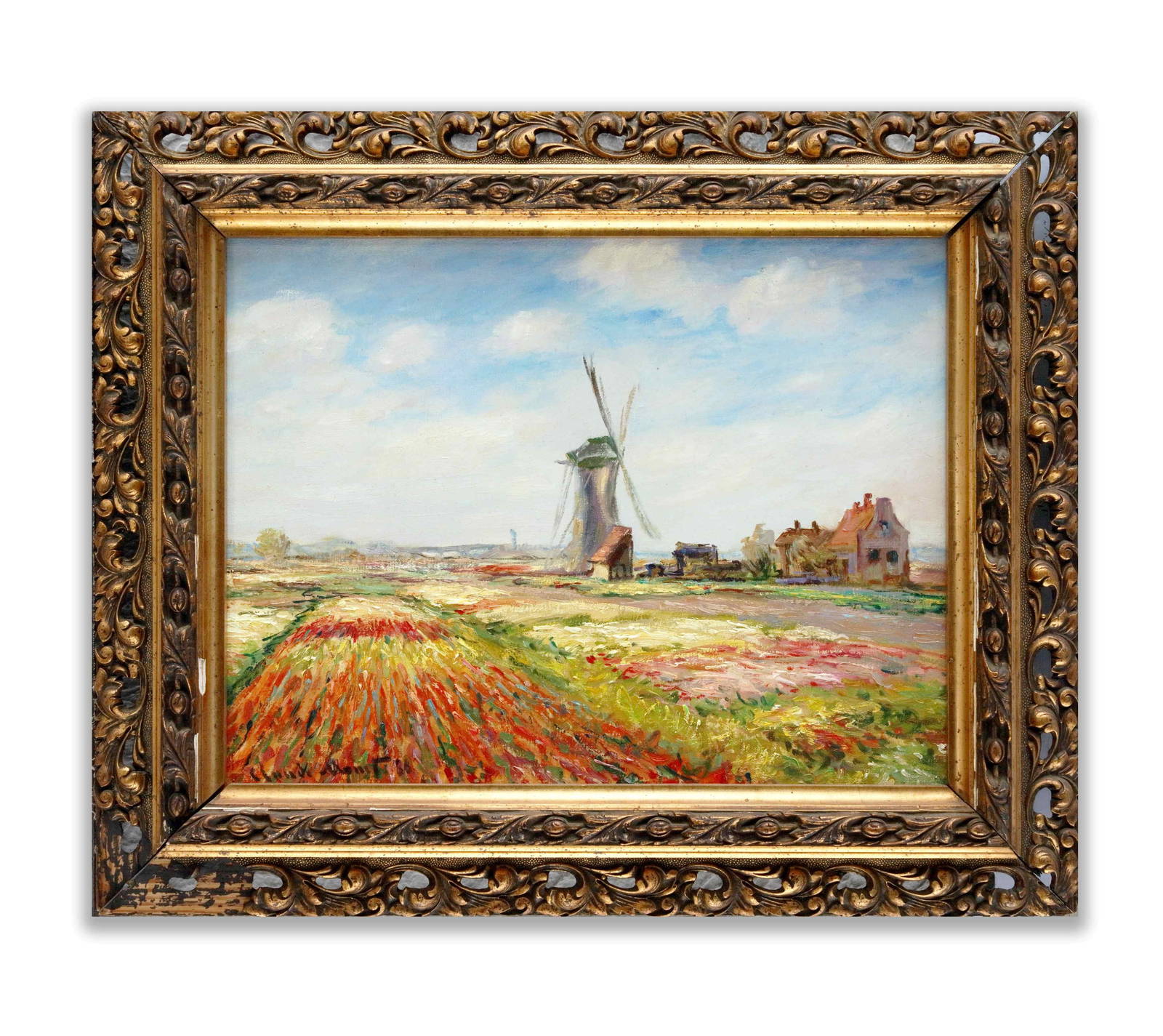
CLAUDE MONET (1840-1926), ATTRIBUTED TO ,OIL ON CANVAS
Price
$ 1 174
Secure Purchase Protection
Verified sellers — All sellers are manually vetted.
SSL encryption — Your data is fully protected.
Returns guaranteed — Full refund for misrepresented items.
Balance protected — Funds held securely until delivery.
CLAUDE MONET (1840-1926), ATTRIBUTED TO ,OIL ON CANVAS Dimensions: Image size:34.8 x 45 cm. All measured values are approximate. Outer frame size:48.7 x 58.5 cm. All measured values are approximate.
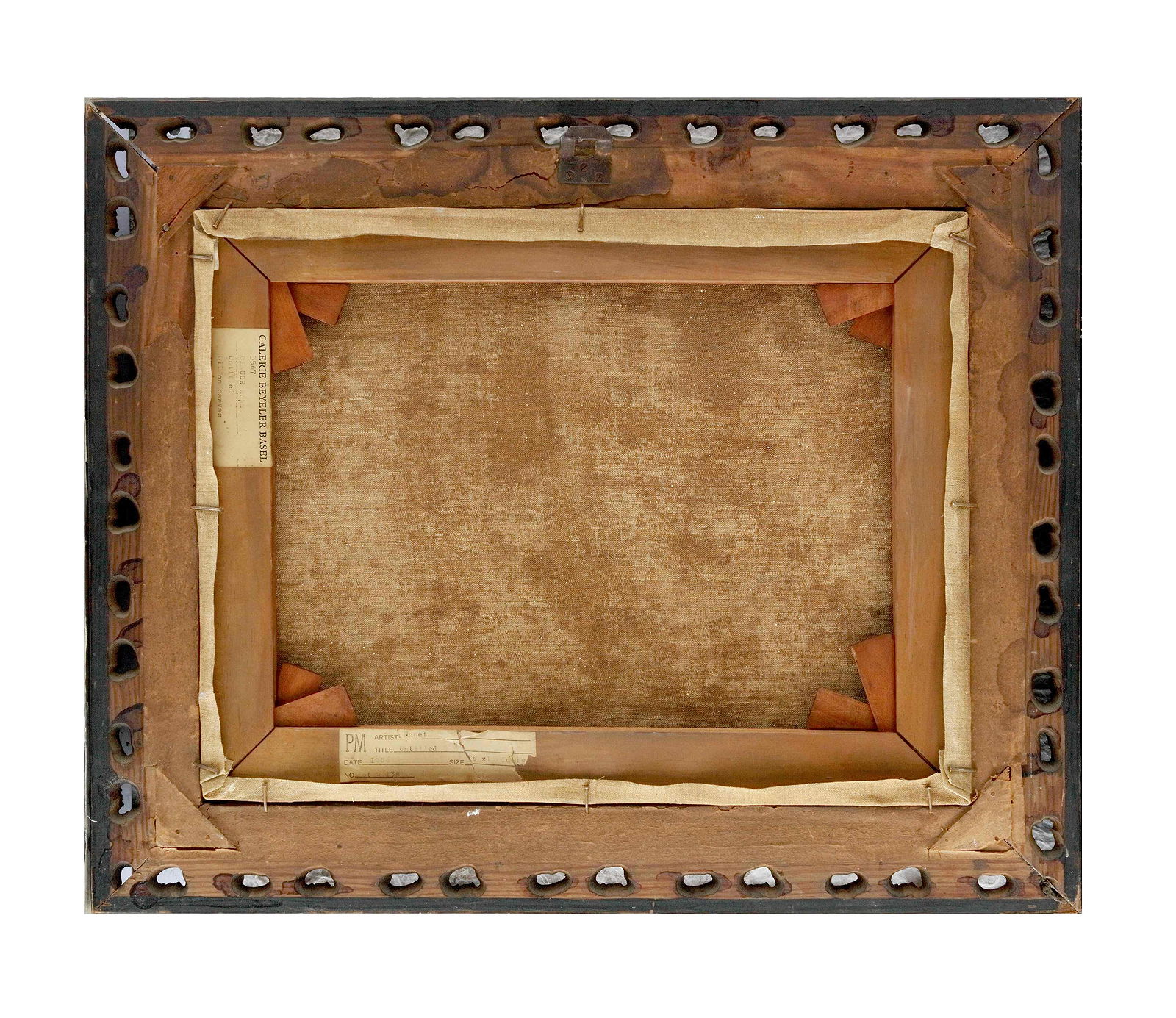
Provenance and Authenticity: This item includes a certificate of authenticity. This premier Impressionist masterpiece features the authentic hand-painted signature of Claude Monet in the lower-left corner.
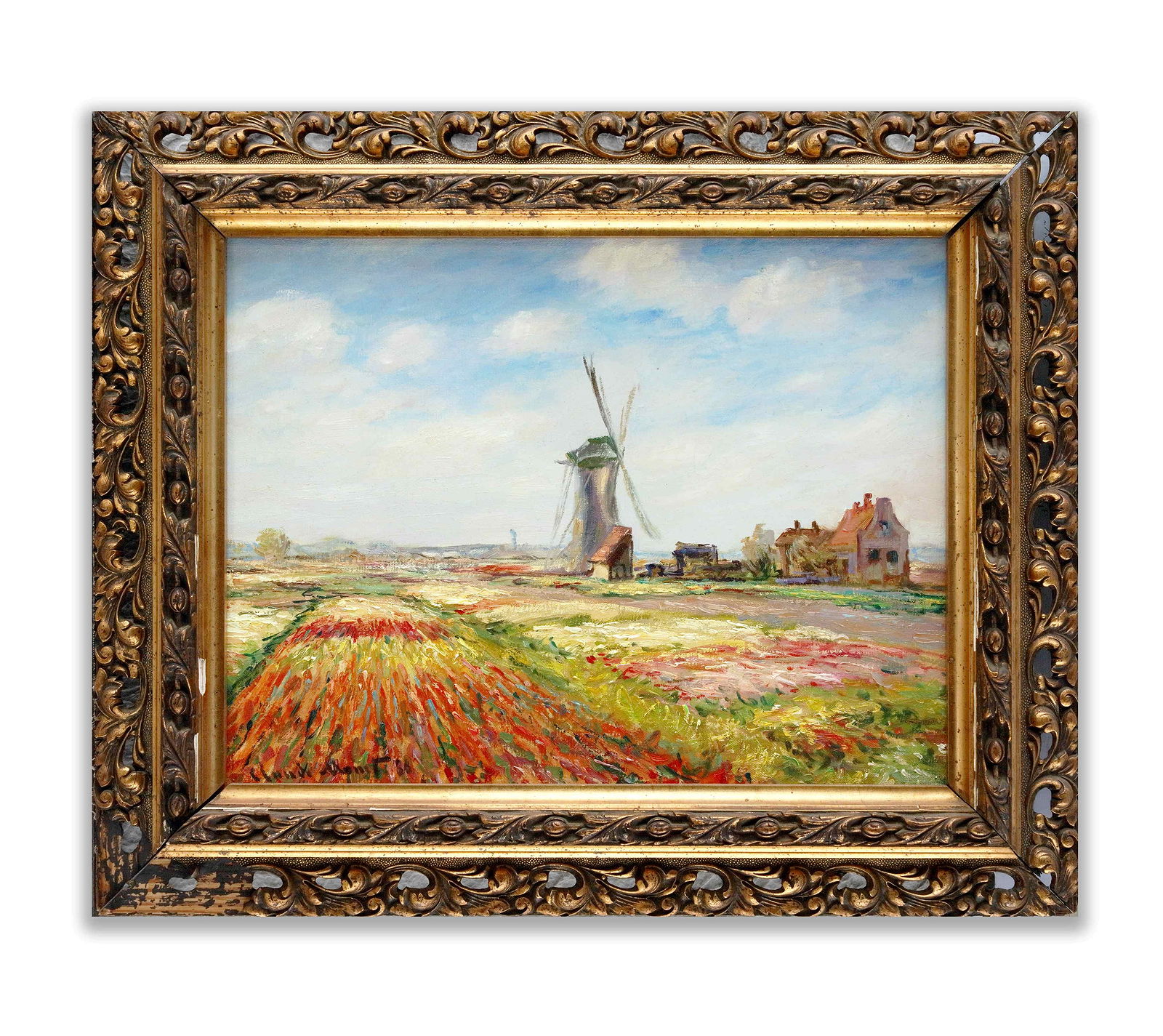
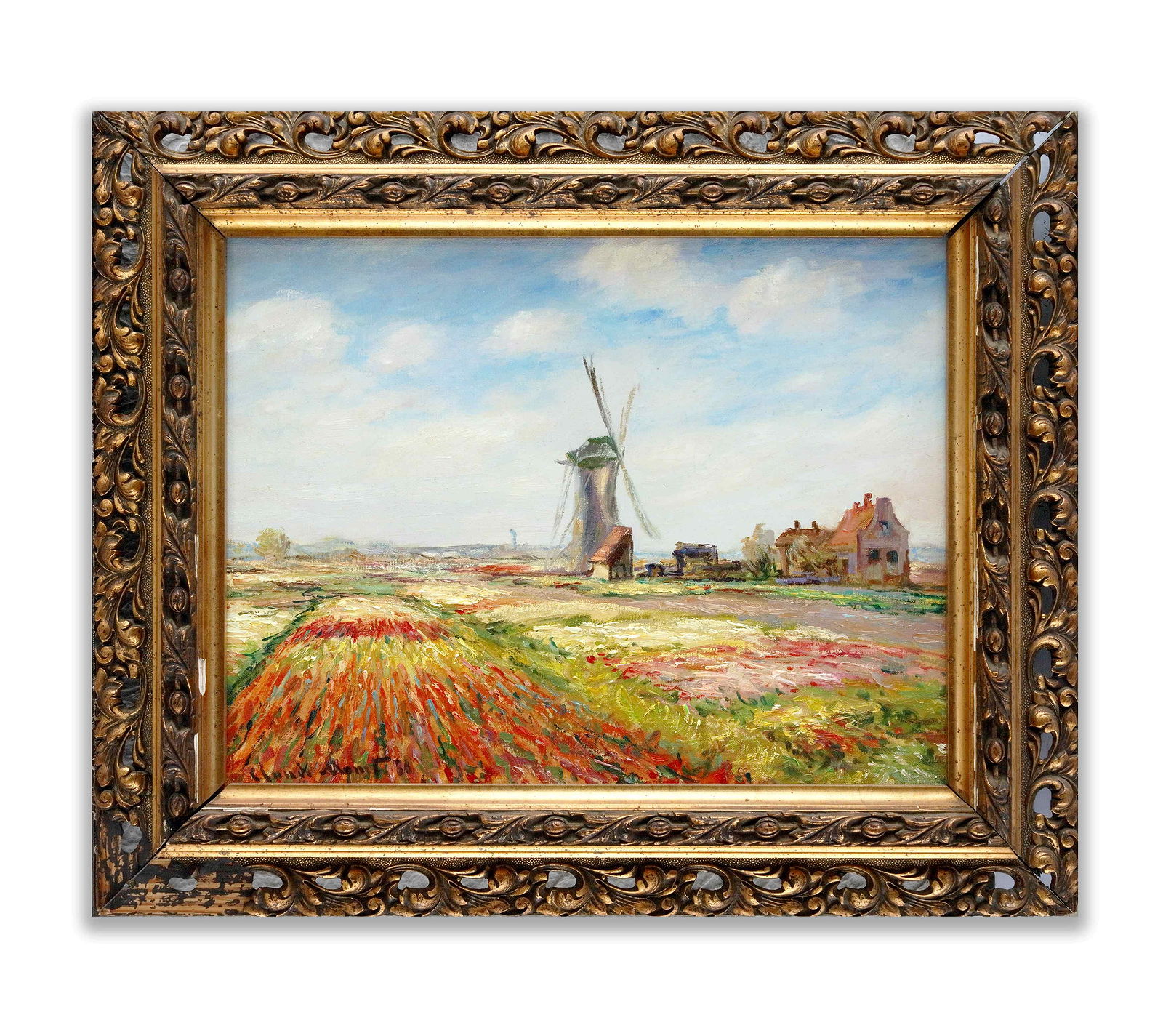
The work belongs to the celebrated series created during the artist's visit to the Netherlands in the spring of 1886, capturing the fleeting effects of light and color with masterful precision. Forensic analysis of the brushwork reveals Monet's definitive "taches" technique-the juxtaposition of unblended strokes that achieve optical color fusion-a hallmark of his mature style. Such works are meticulously cataloged within the Wildenstein Index Raisonné, marking them as foundational artifacts of 19th-century avant-garde art. Signature: Claude Monet signed in the lower left corner of the canvas Description: The composition captures the vibrant landscape near Lisse, dominated by vast, receding rows of tulip fields in the foreground rendered in vivid oranges, reds, and yellows. A majestic Dutch windmill and several traditional farmhouses serve as the central focal point, set against a bright, airy sky filled with soft, moving clouds. Monet utilizes rapid, rhythmic brushstrokes to convey the rustling of flowers in a spring breeze and the shimmering quality of natural daylight. The painting is housed in a museum-quality Louis XIV-style ornate gilded frame, whose elaborate carvings complement the luminous color palette and enhance the work's historical presence. Historical significance: Monet's 1886 journey to Holland was a pivotal moment in his career, as the intense saturation of the Dutch landscape prompted him to push the boundaries of Impressionist color theory. This series represents an early exploration into the "autonomy of color," serving as a theoretical precursor to his later iconic series such as the Haystacks and Water Lilies. Upon their debut at the Galerie Georges Petit in Paris, these Dutch landscapes were met with critical acclaim, further cementing Monet's status as the preeminent leader of the Impressionist movement. Valuation: Works by Claude Monet remain the global "blue-chip" standard for high-end art investment. As major landscape canvases from the 1880s become increasingly scarce in private hands-especially those featuring iconic motifs like the Dutch windmill-market demand continues to drive significant premiums at elite
Provenance and Authenticity: This item includes a certificate of authenticity. This premier Impressionist masterpiece features the authentic hand-painted signature of Claude Monet in the lower-left corner.
The work belongs to the celebrated series created during the artist's visit to the Netherlands in the spring of 1886, capturing the fleeting effects of light and color with masterful precision. Forensic analysis of the brushwork reveals Monet's definitive "taches" technique-the juxtaposition of unblended strokes that achieve optical color fusion-a hallmark of his mature style. Such works are meticulously cataloged within the Wildenstein Index Raisonné, marking them as foundational artifacts of 19th-century avant-garde art. Signature: Claude Monet signed in the lower left corner of the canvas Description: The composition captures the vibrant landscape near Lisse, dominated by vast, receding rows of tulip fields in the foreground rendered in vivid oranges, reds, and yellows. A majestic Dutch windmill and several traditional farmhouses serve as the central focal point, set against a bright, airy sky filled with soft, moving clouds. Monet utilizes rapid, rhythmic brushstrokes to convey the rustling of flowers in a spring breeze and the shimmering quality of natural daylight. The painting is housed in a museum-quality Louis XIV-style ornate gilded frame, whose elaborate carvings complement the luminous color palette and enhance the work's historical presence. Historical significance: Monet's 1886 journey to Holland was a pivotal moment in his career, as the intense saturation of the Dutch landscape prompted him to push the boundaries of Impressionist color theory. This series represents an early exploration into the "autonomy of color," serving as a theoretical precursor to his later iconic series such as the Haystacks and Water Lilies. Upon their debut at the Galerie Georges Petit in Paris, these Dutch landscapes were met with critical acclaim, further cementing Monet's status as the preeminent leader of the Impressionist movement. Valuation: Works by Claude Monet remain the global "blue-chip" standard for high-end art investment. As major landscape canvases from the 1880s become increasingly scarce in private hands-especially those featuring iconic motifs like the Dutch windmill-market demand continues to drive significant premiums at elite
Shipping information will be provided by the seller after purchase.
Payment is processed securely through our platform.